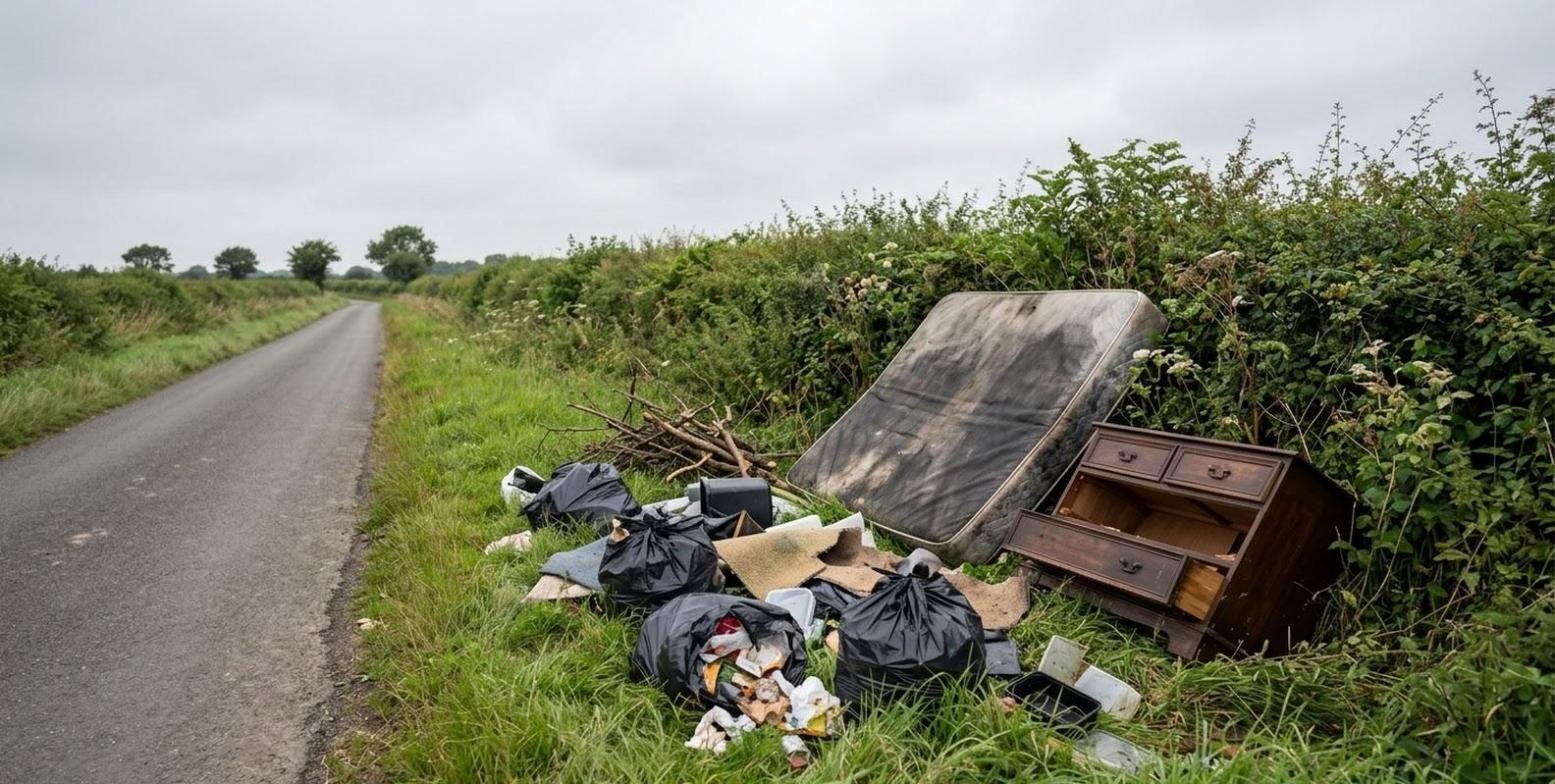
What counts as fly-tipping
Fly-tipping is dumping waste on land that has no licence to take it. It includes the obvious, like a van load of rubbish in a country lane, and the less obvious, like leaving a sofa beside a communal bin or a bag of rubbish next to a charity shop door.
Fines in 2026
Higher fixed penalties came into force in England on 1 April 2025:
| Offence | Maximum fixed penalty |
|---|---|
| Fly-tipping | £1,000 (was £400) |
| Householder duty of care breach | £600 (was £300) |
Serious cases go to court, where fines are unlimited and vehicles can be seized. Kent’s councils regularly fine householders whose waste is traced back to them, often from a name or address found in the rubbish.
Your duty of care
When you hand your waste to someone else, the law expects you to take reasonable steps to make sure they are allowed to carry it. Paying cash to someone who answered a social media post, without checking anything, is not reasonable. If that waste is dumped, the fine can land on you.
How to check a waste carrier
- Ask for their waste carrier registration number before they take anything.
- Check it on the Environment Agency’s public register of waste carriers and brokers. It takes a couple of minutes.
- Make sure the name and vehicle match the registration.
- Ask where the waste is going, and get a receipt or waste transfer note with the company’s details.
We give waste paperwork with every clearance, so you always have a record of who took your waste and where it went.
How to report fly-tipping in Kent
Fly-tipping on public land is dealt with by your district or borough council, or Medway Council if you live in Medway. You can report it on your council’s website or through the GOV.UK report fly-tipping service, which sends it to the right council.
- Note the exact location, ideally with a what3words or map pin.
- Take photos if it is safe to do so.
- Note any vehicle registration, make and colour if you saw it happen.
- Don’t touch or move the waste. It may contain sharp or hazardous items, and it may hold evidence.
Waste dumped on private land is usually the landowner’s responsibility to clear, although councils may still investigate.
If waste is dumped on your land
If rubbish is dumped on your driveway, garden or field, the clean-up usually falls to you as the landowner, which feels deeply unfair. Report it to the council first, as they may investigate and can sometimes advise on next steps. Then get it cleared by a registered waste carrier and keep the paperwork, so you can show it was disposed of properly.
To make your land a less easy target, keep gates closed or locked, improve lighting where you can, and clear any small dumps quickly. Rubbish tends to attract more rubbish.
Warning signs of a rogue collector
- A price that seems too good to be true for a large load.
- Cash only, with no receipt or company name.
- No registration number, or a vague answer when you ask.
- An unmarked van or a contact with only a first name and a mobile number.
If you need a property, garage or garden cleared, use a team that will show its registration and give you paperwork. Our house clearance service covers the whole of Kent, from Sevenoaks to Folkestone.
Related guides: how to check a waste carrier licence and how to choose a clearance company.